
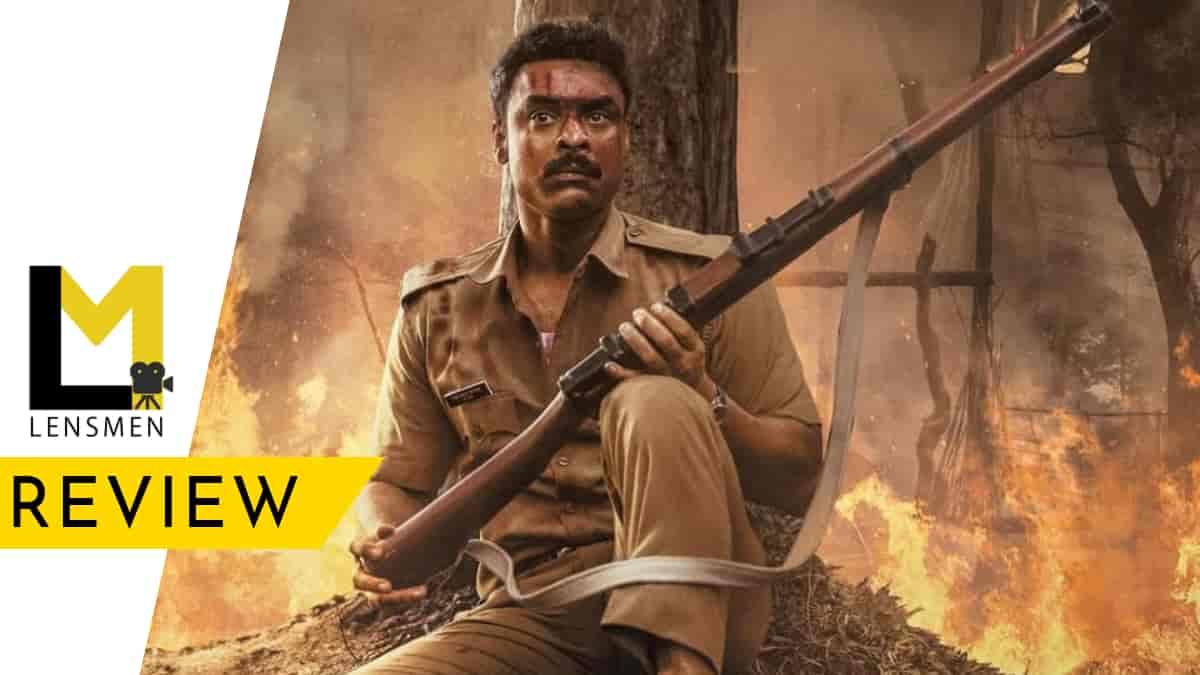
The Muthanga incident is something that has not been documented or discussed in popular media, and what most people know is the police account of the whole thing. The incident that on record took only two lives, a policeman and a tribal man, is said to have more victims from the tribal side. Narivetta, the latest film from Anuraj Manohar, is a fictionalized story that replicates state-sponsored police brutality that happened in Muthanga. While the top-notch production quality, especially the choreography of some of the sequences of the main struggle, really shows the intensity of the atrocity that happened there, the decision to make the hero a naive representation of the ignorant public is taking away the rawness from a movie that should make people research about the real event.
The story is set in the year 2003. Varghese Peter, a young man from Kuttanadu, is trying to get a superior government job. Even though he was not interested in being a police constable, the financial pressure and his desire to marry the woman he loved made him opt for that job unwillingly. What we see here is the events that unfold in the life of Varghese, when he got to be a part of the police force that dealt with the protestors in Wayanad.
Narivetta is being released as a commercial film, and the larger audience it wants to address will be oblivious to the harsh reality of the tribal community in Kerala. So writer Abin Joseph is trying to make the hero, Varghese, a representative of that part of the audience who will also be getting to know about the reality of it through this film. However, the major problem with the movie lies in that characterization decision. From the early moments of the story, we are shown that Varghese is somewhat of an apolitical and selfish person. But to make him transform, they are making him too naive. The way he gets into a fight with an Adivasi guy over something silly and the way he requests an investigation when something unfortunate happens at the protest all make him somewhat of a man-child.
Where the movie soars is when it approaches the pivotal event. It is building that dramatic moment by placing the hero in a tricky situation where he feels like protecting the tribal people, but he is wearing the uniform. There is a parallel track that happens where he sort of realizes what is actually happening backstage. The viewer in me, who was significantly bothered by the characterization issues of the hero, was deeply moved because of the quality of the execution of that whole action block. It becomes this collection of well-edited sequences along with one single shot that captures the trauma from the hero’s point of view.
Cinematographer Vijay has done a fabulous job of capturing the various phases of the story with the required intensity. The rawness required in the protest portions, and the shadow-high interrogation bits all enhance the visual drama. Jakes Bejoy yet again delivers with his scores that really support the storytelling. Renganath Ravee’s sound design is also pretty impressive, especially in the forest portions.
Coming to the performances, the problem with the writing in designing this central character is actually affecting the performance of Tovino Thomas. The version of Varghese, who is determined to expose the reality of police brutality, is actually impressive. But in the earlier portions where his character is supposed to be extremely insensitive, the performance will also make us think, why is he acting like a 14-year-old in the body of a 28-year-old? There is a moment in the movie where Suraj’s character, Basheer, asks him not to say that he wants to see his mother. It almost felt like Suraj improvised that dialogue, seeing Tovino’s performance. Even though the percentage of scenes is relatively low, the most fluent and impactful performer in the movie was Suraj Venjaramood. He is playing this character named Basheer who has a sense of empathy towards everyone who is struggling and Suraj performs that part with utmost grace.
Tamil actor-director Cheran as the police head was an impressive casting choice. His body language and his own dubbing make that character much more real. Arya Salim plays the character inspired by CK Janu, and she portrayed the fire in that character very convincingly on screen. Pranav Teophine, Priyamvada Krishnan, and many more are there in the star cast of the movie, and they were all pretty convincing.
Despite its flaws on a writing level, Narivetta feels like a movie that should be watched, at least on an academic level. I am saying this because the tribal community is still fighting for a safe shelter and that promised piece of land. The fictional finale we see in the movie is perhaps what should have happened in reality. Narivetta is an earnest attempt to retell one of the most brutal police atrocities that happened two decades ago.
