
Guppy and Ambili are the first two movies directed by Johpaul George, and he has sort of established the emotional space of exploring characters as his zone. In Aashaan, too, Johnpaul is trying to create a similar story in essence. However, this time, the backdrop has to do with cinema, and thus it takes the shape of a movie-within-a-movie concept. While the characters and the chaos inside a film set make moments fun, the canvas this movie wants to explore within its limits is too wide, and hence, at times, you end up scrutinizing the practicality of the things we see on screen. Aashan is an ambitious and earnest concept that perhaps needed a slightly more refined treatment.
Anandaraman, aka Anandan, is a visual effects artist who aspires to be a filmmaker. His long-time wish to be part of a film crew to learn moviemaking got fulfilled when a senior director’s single-location movie was struggling to find a suitable location, and Anandan managed to find it for them. The location was an apartment complex, and the caretaker of that space, whom everyone calls Aashaan, was a movie enthusiast, and he readily gave the team permission to shoot. What we see here are the events that unfold there when the shooting finally began.
Just like how Johnpaul constructed a drama in Guppy by creating two characters who are seemingly against each other but deserve similar levels of empathy, here too, he is making Aashaan the story of two individuals. The film gets into its rhythm when it enters the shooting phase inside the movie. Various levels of inside jokes, ranging from the abusive nature of the director, the arrogance of the hero, the strictness of the location sound head, to the torture of ADs, are shown in those portions. There were several difficulties Johnpaul George had to go through while trying to release Romancham, and I think he has tried to include many realities he faced in that portion.
One of the reasons it felt inconsistent was the way it gave space for various tracks. The whole movie shooting thing is consuming a larger chunk of the movie’s first half, which is almost one hour and twenty minutes. The second half of the movie, which shows a different segment of film shooting, should have gotten more emphasis, in my opinion. Even though Johnpaul George is establishing the hero as a VFX artist for logical reasons, you are not getting invested in that part of the story. The movie almost forgets about the primary film shoot at onepoint. While the emotional angle of both Anandan and Aashaan is not necessarily landing, the indie filmmaking techniques and stuff in those behind-the-scenes moments felt much more natural.
We are basically seeing a lot of behind-the-scenes drama in the movie. But in those final moments, where we eventually see that movie they made, there were too many moments and scenes that were totally new for us, and I thought that sort of forced the audience to think about “how” they shot it rather than focusing on the emotional angle of the climax moment. The visual effects work in the movie done by Egg White VFX is extremely good. Johnpaul George has handled the music of this movie, and Kunjikkavil Meghame is a chartbuster, along with some more interesting songs, including one sung by MG Sreekumar.
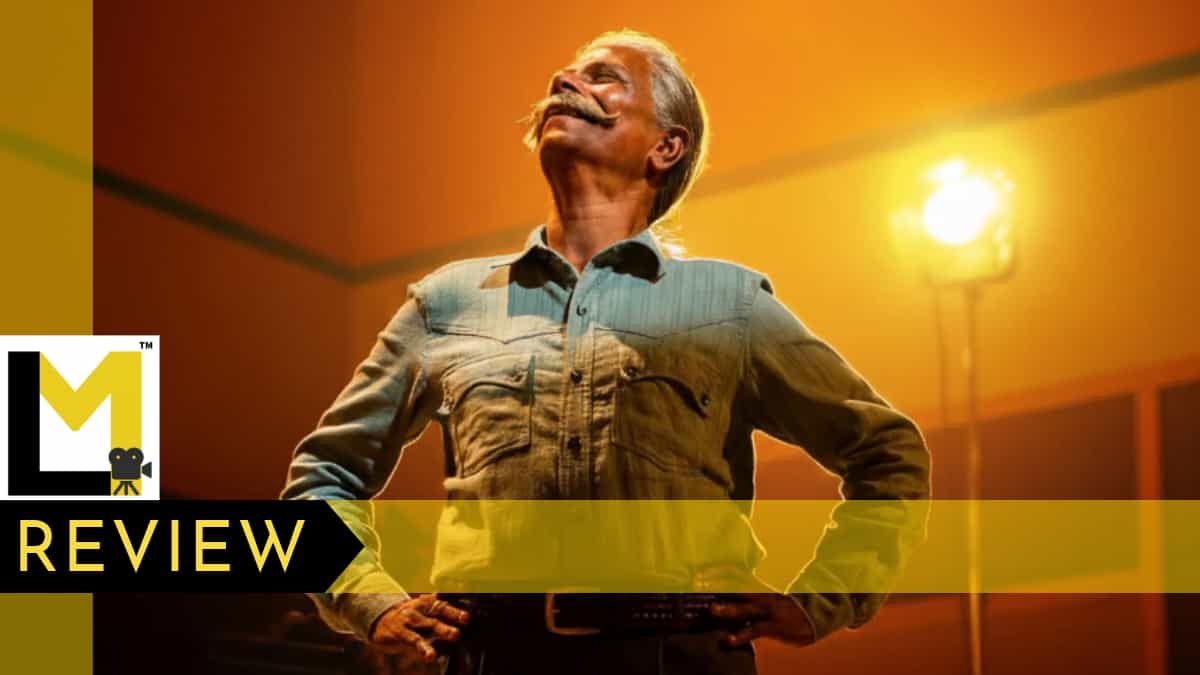
As Aashaan Indrans gets to do a character that basically acts like a showreel of his career. He is a jovial uncle in the beginning, then he becomes that overenthusiastic cinephile. Then we have him as the innocent and hurt old man. Then we see his rage and, eventually, the grace of that character. While this new version of Indrans automatically earns empathy from the audience, my favorite moment of his in the movie was a comedy scene where he was basically put through something similar to the iconic “Thonnakkal Panchayat.” The way he makes a sound before the take while switching to performance made everyone in the theater laugh out loud. If I am not mistaken, this is perhaps one of the first serious roles Joemon Jyothir has had in a feature film. The areas that show his struggle as an assistant director work fine. But when it comes to those moments where we are supposed to root for him, or the scenes where he is shown as an extremely satisfied filmmaker screaming cut and pack up, you feel it as a performance from Joemon rather than him being that character. Shobi Thilakan, as the frequently cussing director, was fun, and I really feel people should explore him more as an actor. Appunni Sasi, as the production controller, was hilarious. Bibin Perumbilli, as this caricature version of a superstar, was okay. Including Madhan Gowri, we can see many creators from this reels and shorts era playing minor characters in this movie.
Aashaan is a mix of familiar elements and a fresh tweak on elements that we feel we have seen several times. The film basically has two layers, where we see the personal stories of characters and the struggle of setting up a film. And in both these tracks, there are areas that would connect with us, and there are phases that would either feel generic or written in a convenient way. In totality, it is a movie where we end up appreciating the genuine intention to club emotional storytelling with behind-the-scenes of cinema. However, the emotional inconsistencies discourage us from rooting for it wholeheartedly.
