
The actual Frankenstein story by Mary Shelly had this key element where the monster created by Victor Frankenstein asks his creator to make a female version for him to love. The ethical differences and concerns of Victor were what led to the major fallout between them. Director Maggie Gyllenhaal, in her attempt to explore this story’s premise, tries to delve into the fictional idiosyncrasies of the writer Mary Shelly, and she adds flesh to a character Mary Shelly never created: the female partner the monster requested Victor to create. While this idea offers a unique twist to the familiar tale of Frankenstein, Maggie attempts to do too many things here, ranging from being a tale of female rebellion to also being a mad and violent Romeo and Juliet. And what you eventually get is an over-intellectualized love story that mistakes recklessness for uniqueness.
Set in the earlier part of the 20th century, we have Frankenstein’s monster, Frank, trying to gel in with the world, and his hideous look makes him repulsive to most people. He eventually goes to meet Dr. Euphronius to help him create a partner, a bride, to live a normal life like others. They both found a female body to do the lightning-powered technique used by Dr. Frankenstein to create the monster, and they brought her back to life. Who she was and what all she went on to do after this reincarnation, with no idea about her past, is what we see in this movie.
The script almost feels like a reaction to the lack of female representation in the original work. Mary Shelly’s work was about a man who made a male monster, how it put him in a conflicted space, and how that monster struggled to survive. So in Maggie Gyllenhaal’s story, the creator and the monster are females. Unlike Mary Shelly’s monster, who is trying to learn even the most basic things, here the female monster acts like an activist who is actually possessed by Mary Shelly. This is like a weird timeline where both Mary Shelly and Frankenstein exist in the same reality. The ending that uses Dr. Frankenstein’s monster creation method in a different way was actually impressive. However, the whole musical-like rebellion and the way the movie sidelines Frankenstein as this ultra-naive person, somehow reduces the movie into a collection of statements.
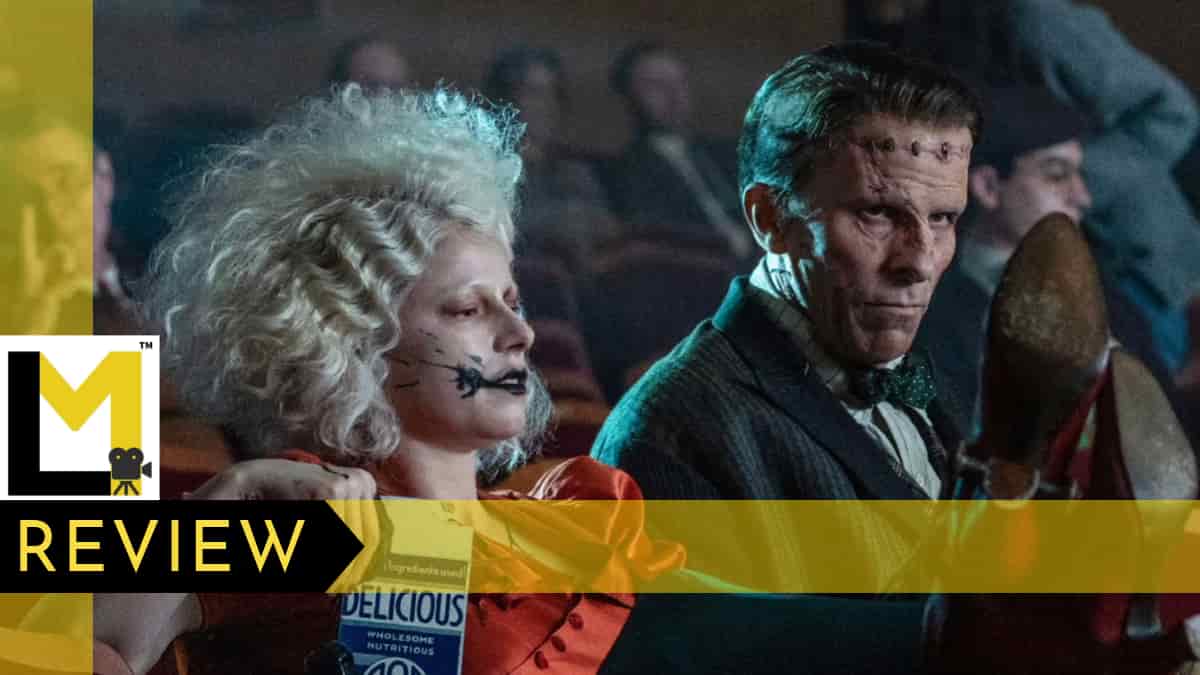
The most enjoyable thing about the movie, in my opinion, is the performance of Jessie Buckley as the title character. Possessed by Mary Shelly, the character is always in that vivacious zone with a rhythmic vocabulary matching that energy. Striking a balance between the intellect and madness of that character is a tough thing, and she cracked that zone brilliantly. Christian Bale as Frank, the monster, is pretty much hidden under the prosthetic makeup. In this version of the story, he is a goofy observer and admirer of The Bride, and he does that bit with conviction. Annette Bening as the mad scientist Cornelia Euphronious was memorable. Jake Gyllenhaal is part of his sister’s directorial as Hollywood actor Ronnie Reed, whom Frank admires deeply. The other names in the supporting cast with relatively minimal screentime include Peter Saarsgaard and Penelope Cruz.
The POV of this gothic movie is somewhat from Mary Shelly, who is dead, and hence there is a sense of erraticness to the visual treatment of the film. The movie is rarely gentle as it wants to put the audience in that chaotic mindset of the main character. The darkness of the theme is visually communicated to us through the shadow-heavy lighting of most of the sequences. If you look at the backstory of the girl who eventually became The Bride, there was actually an enticing plot that could bridge the two realities in the script in a compelling way. Unfortunately, the movie prioritizes this symbolization of that character as a mark of female resistance, and that is done in an in-your-face way. Those portions take away your interest in the movie, and the writing is not able to induce any empathy in us towards the central characters. From black and white visuals lit from the top to showing the characters on a drive-in theater’s screen, Maggie Gyllenhaal is trying to grab our attention using all the visual tools. But once the romance begins, the movie loses that element of intrigue.
The Bride! is distinctive for sure. The fact that it is set in a timeline that happens after whatever we know through the book gives it an element of freshness. But rather than rooting the newly formed character in dilemma and empathy, Maggie Gyllenhaal makes her this source of rage and vocabulary, which eventually forces the movie to be this unsubtle, woke speech about atrocities against women. Sparks of visual filmmaking are definitely there. But the overall result is an underwhelming mess.
