
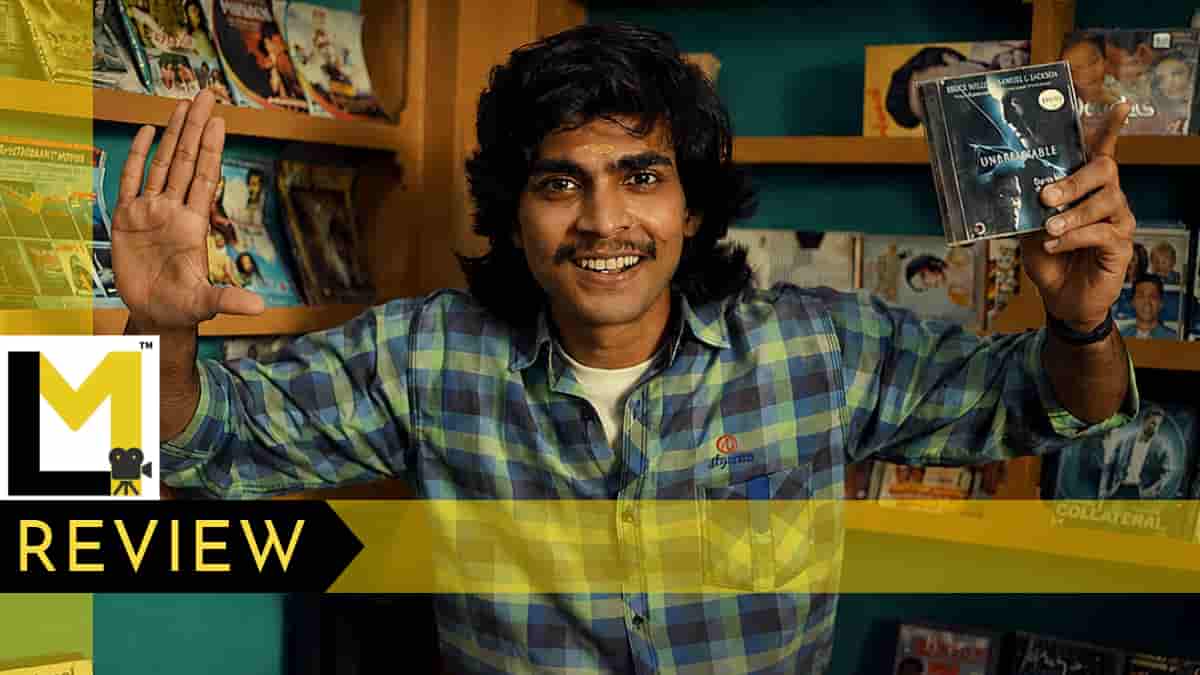
The director of the movie Mollywood Times, Abhinav Sunder Nayak, had said that this movie is part of the success trilogy he is planning, and Mukundan Unni Associates was the first in that. And he had also said that this one will not be as cynical as Mukundan Unni. If you were slightly disappointed by the second statement, I would say I have good news for you. Because this movie is easily identifiable as the second film of the man who made Mukundan Unni Associates. If Mukundan Unni Associates was a movie that reflected Abhinav’s state of mind at that point, Mollywood Times can be described as the story that took him to that state of mind. Mollywood Times is an entertaining depiction of the muddled politics in Malayalam cinema.
Vineeth Madhavan is our main guy, and he’s from Kuttikkanam. He was a horror novel enthusiast as a kid. At one point, when he witnessed the movie The Mummy in Dolby DTS, he got inspired by the medium of cinema, and later, when he realized Manoj Night Shyamalan, a man of Indian origin, had made it big in Hollywood, he became extremely passionate about filmmaking. What we see in Mollywood Times is the journey of Vineeth Madhavan that made him a rough guy who is presumed to be a snob by many.
Abhinav Sunder Nayak has given several interviews ahead of the release of Mollywood Times, and some of the points I just mentioned about the movie were narrated by him in those interviews as his introduction to cinema. He had also talked about his difficult journey to mount his first project and why it took so much time compared to his peers. Almost the whole first half of the movie is an entertainingly narrated version of Abhinav’s own journey. And as he claimed, he is trying to ground the story in harsh realities at each point by making the journey never easy for the hero. Every step in the hero’s journey to make it to the big arena has some sort of hurdle. Sometimes it is logistical, and sometimes it is financial, and Abhinav uses the minute details of those struggles to make that phase entertaining. And that makes the movie relatable even to those who haven’t seen what Orkut looked like.
The fresh elements in the story mostly happen in the second half, where Vineeth Madhavan has to deal with the power politics in the industry. From pleasing the big names to getting banned for protecting his movie, we get to see how the hero’s passion towards making his first movie a first of its kind gets perceived as arrogance. In a way, this movie can be described as Abhinav’s response to all those who are calling him arrogant for his clarity, which perhaps came out of his perseverance. And the nice thing was that the script written by Ramu Sunil wasn’t deliberately making the characters who opposed Vineeth Madhavan dumb. There was a very nice debate between Vineeth and a film critic about the ownership of a movie. There are areas where he addresses the point of how movies devoid of craft but have relevant politics are praised simply because of the struggle or backdrop of the filmmaker. I mean, these are very sensitive topics that can add more labels to Abhinav as a filmmaker, but he is not diluting his stand. And that boldness in many places was not something I was anticipating.
Much like Mukundan Unni Associates, here also Abhinav uses the aid of voice-over very extensively, and since this is from the POV of the hero, that style became very entertaining. The edits have a faster rhythm this time as the story is covering far too many events. And similar to Mukundan Unni, there are these funny 2D animation inserts that accelerate certain developments in an engaging way. When it comes to the second half, there are far too many developments happening in the story, with almost all the characters we have seen so far getting involved in a tussle to make a movie. Just when you think the movie is losing that element of fun, Abhinav drops something “deadly” that sort of brings back the shockingly funny twists we have seen in Mukundan Unni Associates. The frames this time have a vibrant style, and the lensing also shifts according to the tone of the scene. While Apna Friday Aayega carried the optimism, the GOAT song was on the rebellious side. I loved how Abhinav used Vinayak Sasikumar’s lyrics as a line in one of the crucial moments in the final moments. The sound design is enhancing the narrative through several addons and stuff. And the scene that depicts the first DTS experience was also crafted beautifully.
Vineeth Madhavan is a character who transforms from unrealistic optimism to grounded cynicism. And Naslen carries that energy in the perfect way possible. A larger part of the performance lies in that likeable zone with humor. But there is a shift in tone when things go downhill for Vineeth Madhavan, and Naslen was able to portray that rebel energy in a convincing way. Sharaf U Dheen as Sachin gets a character with a very unique graph. He is introduced in a certain way, and as the movie progresses, he becomes the symbol of a certain category of filmmakers, and with his signature humor, Sharaf makes that character memorable. Even though the screentime is relatively small, Sangeeth Prathap was good in the character offered to him. Roshan Shaanavas, as Vineeth’s best friend, gets to do a full-length role with a lot of dramatic shifts, and he was pretty effective. Appunni Sasi, as the crooked old-school producer, was really good. Gopika Ramesh is part of the cast, along with several cameos and extended cameos that were used impressively by the film.
A lot of people who believe in the idea that cinema should give hope to the audience had a major disagreement with the tone and style of Abhinav Sunder Nayak’s first film, Mukundan Unni Associates. Idavela Babu had openly expressed his displeasure with watching such a movie. Well, if you are in alignment with Idavela Babu, this movie is clearly not for you. Mollywood Times is exploring success in a very grounded way, where luck is very rarely in favor of our hero. There is a point in the movie where Abhinav talks about one kind of plagiarism that can’t be challenged legally. And towards the end, he shows a very dark-humor-ish irony of the original idea claims. If you have found the worldview of something like Mukundan Unni Associates intriguing, then this one has enough and more in it to engage you.
