I wasn’t an ardent fan of Dhurandhar when it was released a few months ago, and the reason wasn’t necessarily the craft aspect of it. I found the movie’s politics, which blatantly sold hate, to be extremely problematic. As you can imagine, the reaction to such feedback was pretty hostile, and people almost used this movie as a barometer to judge someone’s level of patriotism. Aspects such as the pulsating edit pattern, violent action blocks, and considerable reduction of green screen in action sequences made Dhurandhar a watchable movie for those who claim to be politically neutral. If you belong to the category that feels the politics of the story is secondary and inducing a certain kind of hate through film is also art, then I must say Dhurandhar: The Revenge is the movie you are looking for. Many people who watched Dhurandhar had said that they enjoyed the movie even though they realized it was soft propaganda. Well, your approval has given Aditya Dhar a lot of confidence, and this time he isn’t that soft.
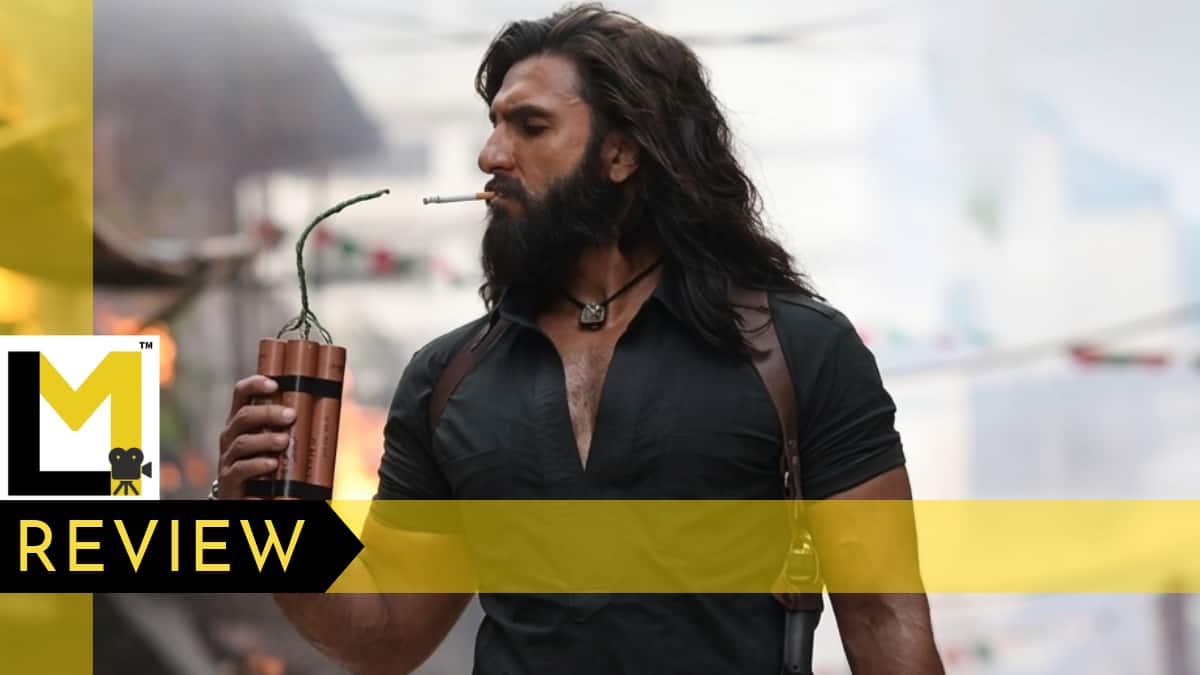
This time, the story goes back to 2002 to show us the backstory of Jaskirat Singh Rangi. There were certain injustices that happened to his family, which made him an animal who was seeking revenge. Long story short, Ajay Sanyal saw the potential in him and made him the Dhurandhar we know. In the second part of Dhurandhar, we see the rise of Hamza as the most powerful man in Lyari while hiding the fact that he works for India.
This is a commercial fantasy thriller that wants to celebrate the fictional idea that an Indian spy became an extremely powerful figure in Pakistan and made sure every guy involved in a conspiracy against India died. If you look at it from a cinematic POV, it is a very enticing “what if” idea. But the problem is that Aditya Dhar isn’t focusing on building a drama around the concept. He has a way of breaking the conventions through the crafting style. The most evident one is his choice of music. The beats of the music aren’t conventional, and that sort of creates a uniqueness. While there are sporadic moments of dramatic spikes, such as the “Et tu, Brute?” chapter in Dhurandhar or the interval point in this movie, Aditya Dhar’s focus is more on making things visually flamboyant, gory, and stylish to cater to the general audience.
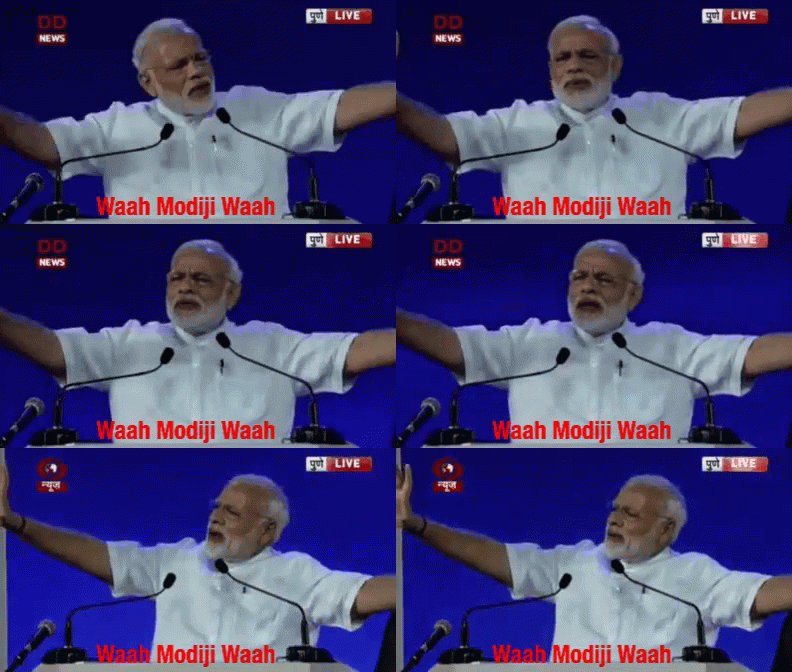
In the first part, there was this evident buttering of the ruling party when Sanyal says that we will definitely have a government in the future that will take action against Pakistan. And the detail about fake currency was an obvious setup for something big. If we can call those references in the first part subtle, the second part has no subtlety in its intentions. SPOILERS AHEAD! Narendra Modi appears twice in this movie through original footage. One was taking the oath in 2014, and the other was him announcing demonetization. In the first appearance of PM Modi, we see Major Iqbal’s father asking him mockingly, ” You said your guys would come again as usual (Congress), but this time it’s different.” And then you have the best one. Hamza realizes that Pakistan is about to send a huge amount of fake currency to India, and the UP elections will be won by the wrong people if that happens. To protect democracy in UP and destroy Pakistan’s master plan, we all stood in line. The bad Muslim from UP is even saying that the Chaai Wala has destroyed us. The appeasing goes to a whole different level with a most wanted criminal choking in death bed, hearing the Ramajanmabhoomi verdict. Towards the end of the movie, there is a moment where LPG cylinders are getting blasted as part of the plan, and if Dhurandhar 2 was made at a later stage, Aditya Dhar might say the current LPG shortage was also part of a masterstroke.
We get to see both the vulnerable and unshaken versions of the central character in this movie, and Ranveer Singh has done a really good job in being that character both physically and emotionally. The demeanor and voice modulation give that aura you can associate with a person like Hamza. Arjun Rampal as Major Iqbal gets more space, and the movie shows us the backdrop of that character. In his typical style, he was able to bring that intimidating feel to the character. In my opinion, Sanjay Dutt’s SP Chaudhary is more of a comical character in this movie. R Madhavan is fine in his limited appearance as Ajay Sanyal. Somebody had said that there is a reason why Sara Arjun, who has a huge age gap with Ranveer, was cast opposite him. I don’t really understand how making that character pregnant and a mother justifies that casting choice. Much like the first part, my favorite performance came from Rakesh Bedi, and the most response from the audience came for the scenes featuring Mr. Bedi.
If you look at the scripting of this whole story, including one and two, the idea is pretty linear and basic. The intrigue is built through the script’s structuring. The editor Shiv Kumar Panicker and the trailer editor Ojas Gautam have been credited as additional screenplay writers, and I feel it was done because they both may have restructured the written script at the editing table. The cinematography that follows a rustic color palette, handheld shots, and the use of saturated colors in certain moments definitely adds a layer of drama to the concept that basically feels like an appeal for a national award. The CGI is much better when you compare it with the green-screen heavy stuff that you see in the YRF universe. Towards the very end of the movie, there are some moments that are somewhat heroic and funny, which give the movie a spike at the end. And even the fourth-wall-breaking ending also had some depth when you look at the character’s journey. The appeasing tone of the rest of the content is doing a massive disservice to moments like this.
Dhurandhar: The Revenge is a fictional story where they have used the real names of many people who actually lived in Pakistan and India. And at multiple points in the movie, one can clearly see the film trying to depict India Vs Pakistan as a Hindu Vs Muslim kind of battle. In my opinion, the real mastery of Aditya Dhar lies in his ability to utilize the gore-filled, technically superior craft elements, which makes people overlook the problematic aspects. Vivek Agnihotri and Vipul Shah should attend his filmmaking classes.