
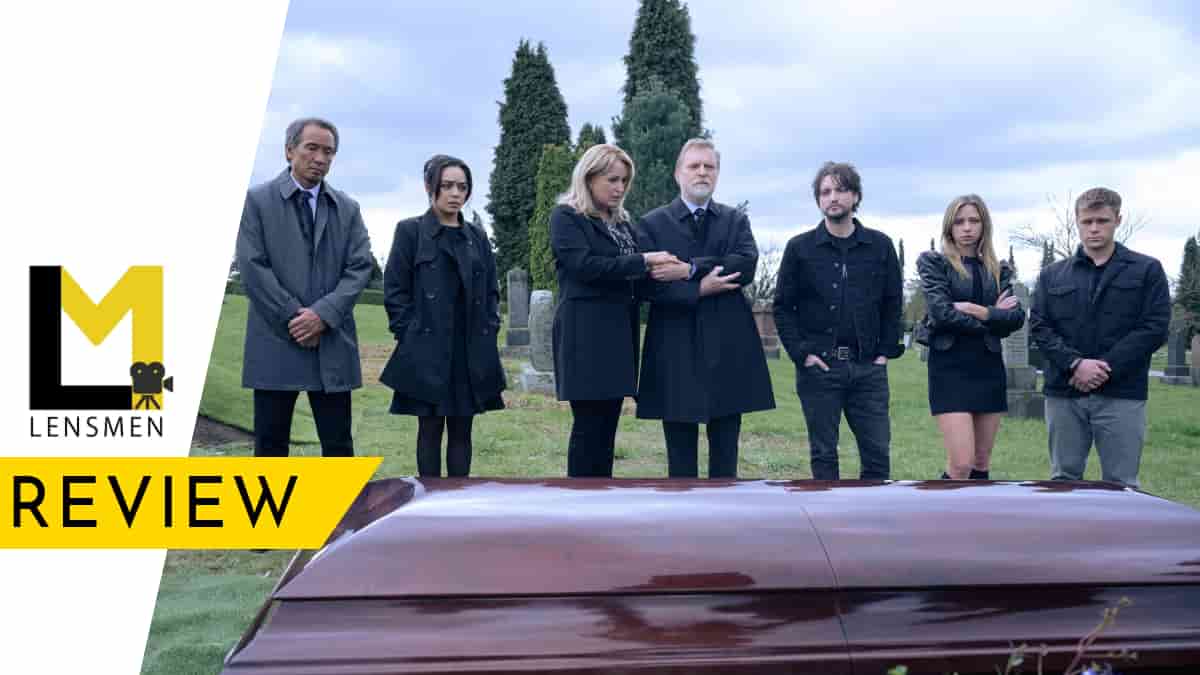
The Final Destination franchise, over the years, has become this repetitive movie formula, where we are mostly excited about how the people are getting killed rather than having a coherent story. The first part had the first mover advantage, and the other movies, except for the 2011 one, were pretty much the same formula with lazy writing. When it comes to the latest addition to the franchise, Final Destination: Bloodlines, it works as both a sequel and prequel, where we sort of get a better understanding of the rules of this whole thing. With the film’s writing taking into account the possible ways in which the audience would predict things, I would say Bloodlines is easily the best and smartest film in the whole franchise.
This part of the review will feel like a spoiler if you haven’t watched the movie trailer. Stefani, our main protagonist here, discovers that certain deaths are happening in her family, most unusually, and she finds out that the reason for all this could have a connection with her grandmother, who is now living alone far from everyone. What we see in Final Destination Bloodlines is Stefani’s exploration to understand what happened with her grandmother and what she could do to stop these deaths.
The DNA of this movie is also very much the same. Somebody has a premonition about something really bad going to happen. They eventually end up saving everyone from that possible event, and like all the other films in the franchise, death doesn’t like people messing with its plans, and it is killing everyone in the order they should have died that day. The story of this movie is written by Jon Watts, the director of the MCU Spider-Man movies, along with screenwriters Guy Busick and Lori Evans Taylor. The great thing about the writing is that they are trying to give a solid foundation to the basic idea of the franchise, and at the same time, they are making it a lot more about surviving. And that perspective occasionally gives the movie a chance to look deeper into its characters.
Unlike the other films in the franchise, here we are not seeing enormous, large set pieces. Directors, Zach Lipovsky and Adam Stein, know that at a time like this, when setpieces are no longer going to excite audiences, they should work on breaking the pattern without necessarily changing the DNA of the franchise. So yes. Like all the other films, we have these set pieces that are designed like a chain reaction. But they have redesigned it in a way that the timing never matches the prediction of the audience. Sometimes even the guesses of the characters are also going wrong, and that actually adds a sense of freshness to the death spree. And there are areas in the film where the efforts to stay alive almost make this movie a spoof of its own franchise. And the use of decoy twists should also be appreciated.
Kaitlyn Santa Juana plays the one with the premonition in this part of the franchise, and she gets to portray this character who has a fairly solid backstory featuring her abandoned mother and a strained relationship with her brother and cousins. She pulls off the character neatly on screen. Richard Harmon, as Erik Campbell, gets a character that perhaps needed some transformation, and his character gets fairly good screentime. Tony Todd reprises his role as William Bludworth, and this time, we get to know why he is the common factor in all these movies.
The visual effects quality has considerably gone down in many Hollywood biggies recently. When it comes to the bigger set pieces in Final Destination Bloodlines, you can see that quality deterioration. While the blood-spilling moments in the film have the same old, gruesome feel, the movie is surprisingly less focused on being gory. It is more about the scaled-up idea of death coming to fix its plan that got messed up.
