
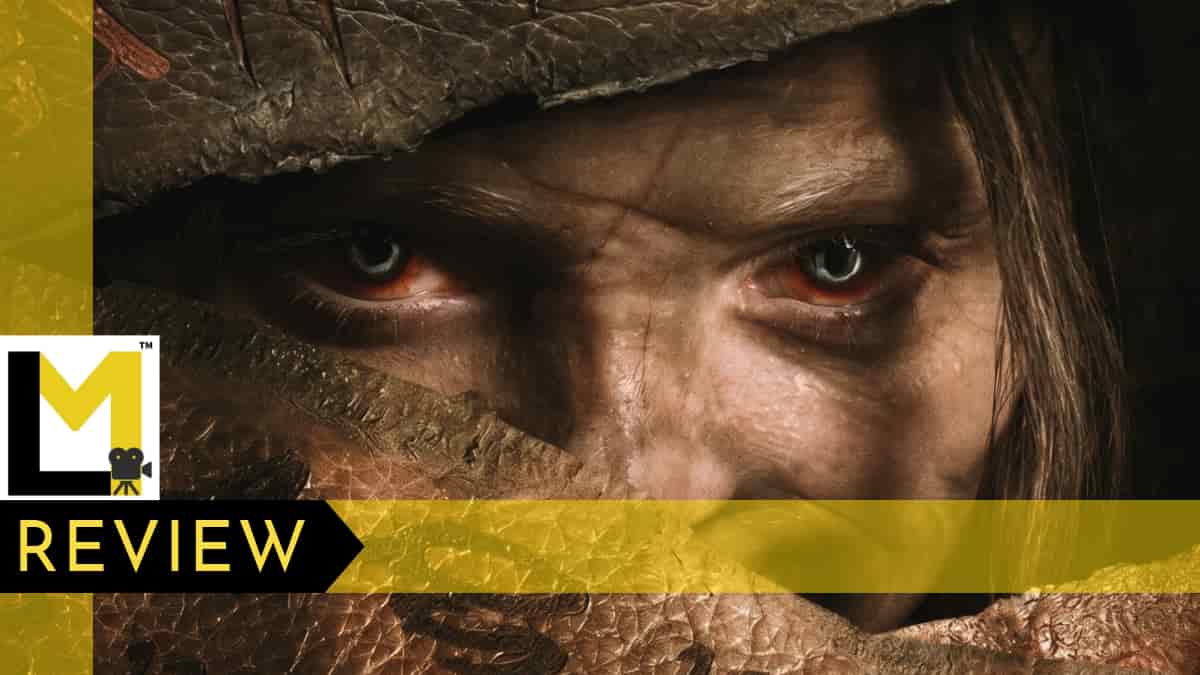
The 1999 Stephen Sommers movie, The Mummy, starring Brendan Fraser, was primarily treated as an adventure film. Even Tom Cruise’s 2017 attempt to reboot the franchise favored the action-adventure format. The latest Mummy movie, titled “Lee Cronin’s The Mummy”, is trying to give a different approach to the whole idea by making it a completely supernatural horror thriller. With James Wan’s Atomic Monster and Blumhouse Productions backing this movie, Lee Cronin’s film tries to create a concept that focuses more on gore and mayhem rather than the typical idea of finding a solution. Even though it isn’t exploring anything substantially new, once the larger set piece starts to unfold, we are in for an uneasy, violent ride.
Journalist Charlie Cannon and his family, consisting of his wife and two kids, were in Cairo at one point. One day, while playing in the backyard, Cannon’s daughter Katie got abducted by a native woman. The family couldn’t find her, and years later, when they had moved to Albuquerque, New Mexico, they were informed that the Egyptian government had found their daughter. Katie was found in an extremely fragile condition, and what all happens in that family while they were trying to help her recover is what we see in Lee Cronin’s The Mummy.
The treatment of the movie is not going after the scale factor. Much like most films backed by Blumhouse and James Wan, it is about the choreographed horror that uses elements like cuts and sound design that keep us unsettled. The treatment of the movie in the earlier parts follows the pattern of any other horror film, where you can anticipate the jump scare. But what is interesting here is the way they interpreted the concept of Mummy and Mummification. Lee Cronin tries to create unpredictability through the way he uses characters in the narrative. The characters who get a softer treatment typically in films are getting an opposite treatment, and you will be taken aback by the gruesomeness of the eventual showdown.
Lee Cronin, who has previously made Evil Dead Rise, knows that his movie is not something that is going to impress the audience with its concept, like Weapons, for example. So the idea here is to mix conventional jump scares and unexpected brutality to keep the audience engaged. This is not a movie that tries to tease you with a franchise possibility. In fact, the closure we get here is pretty straightforward, and it is not really trying to make things gray by delving into the emotional repercussions of all this on the characters. Since the emphasis is more on how visual elements can create tension and horror, one can see this rarely used visual tool, the split diopter, getting used extensively in this movie. It is a shot cinematographers rarely use, and it was actually there in one shot of the recent Malayalam film Pallichattambi. Usually, we see it used vertically, where the invisible crease will be in the middle vertically. Here, maybe because of the possible criticism of it being overused, Lee Cronin decides to use the split diopter horizontally as well.
Jack Reynor plays the role of the head of the family, Charlie Cannon. There is a sense of calmness to that character even in the most violent situation, and Reynor was able to show that in a believable manner. Spanish actor Laia Costa plays the role of the empathetic mother. Egyptian actor May Calamawy plays the part of an investigating officer through whom we get to know the backstory that connects this horror movie with the idea of the Mummy. Natalie Grace, as old Katie, gets to do the spooky acting that was physically demanding. Little Billie Roy plays the dual shades of Maud very impressively on screen.
Lee Cronin’s The Mummy is a film that isn’t path-breaking in terms of how it treats itself as a horror film. But the fact that it takes a detour from the usual adventure style of Mummy movies gives it a sense of freshness. With the R-Rated gore managing to surprise the audience in a slightly unsettling manner, this one is an enjoyable horror film with familiar beats and traits.
