
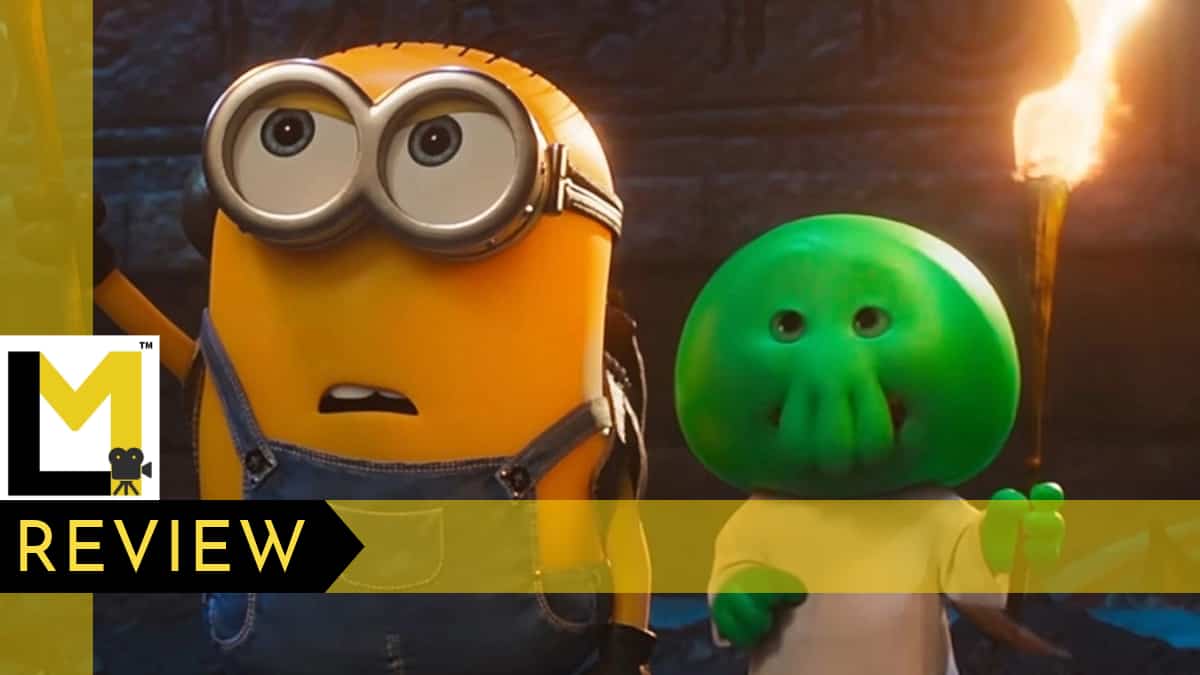
The third film in the Despicable Me prequel franchise, Minions and Monsters, offers the kind of fun we associate with the unique character pool of minions created by Sergio Pablos. This time, too, we are seeing the story of Minions going in search of an evil master to serve. And instead of going after new characters, Pierre Coffin and Brian Lynch decide to give it a Hollywood spin by making it a movie about movies. Even though this idea at times reduces the fun quotient, it helps the movie to have some narratable events and a slightly different structure. With the regular dose of funny gibberish from Coffin’s voice acting, Minions and Monsters is a 90-minute easy, breezy laughter package.
This happens in the pre-Gru era, and we witness this story of Minions moving from one place and civilization in history to another in search of their evil master. And that journey eventually takes them to Los Angeles in the silent film era of Hollywood. Two minions, James and Henry, were different from the tribe, as they didn’t enjoy this process of seeking a master. What we see are the events that unfold when James gets an idea and decides to make a proper movie with limited resources.
The first 45 minutes of the movie, the events that lead up to James having this passion for filmmaking, are extremely entertaining. The kind of choreography-heavy dialogue humor that we have seen the Minions do through all the movies in this franchise is happening in that space, and every moment of that is hilarious. The sequences that show their time with each evil master are designed in an extremely funny manner. The decision to take the story to Hollywood actually works as a satirical homage to classic Hollywood. From Buster Keaton’s dangerous stunts to Citizen Kane, the references we see in that initial portion take the movie away from the usual template of animation films. Coffin is even taking jibes at the lifestyles of stars and the issues within the industry through the Minion-style humor.
When it comes to the second half of the movie, it becomes more about the film that is being made inside this movie. The bad guys in that portion and the way they are tackling the bad guys aren’t really making much of an impression. And even in terms of the comical elements, the graph is sort of dropping in the middle portions. But by designing set pieces that know how to utilize the funny and slapstick energy of these Minion characters, Pierre Coffin gets the movie back on that track we all enjoy, and there are some really funny moments towards the last quarter of this film.
The voice acting of the Minions is done by Pierre Coffin himself, and this time I felt the gibberish was relatively on the lower side. And I loved how they used the humor associated with the gibberish in that sequence, which shows the Minions’ struggle when sound came to cinema. In those portions, unintentionally, the movie actually makes you realize the importance of sound as an entity in cinema. The voice cast this time has Christoph Waltz as a director named Max, who motivates and supports James to make a film. Jesse Eisenberg lends his voice to this robot named Dort.
As I said, there is a drop in energy somewhere in that middle portion. But the way they infused that idea of Hollywood into this movie takes it away from that run-of-the-mill kind of space. With a crisp runtime and abundant choreographed humor, there is a visual appeal to the whole story. In comparison to the last Despicable Me movie, I would say this one felt more like a genuinely interesting idea rather than a hasty attempt to churn out money from an established franchise.
