
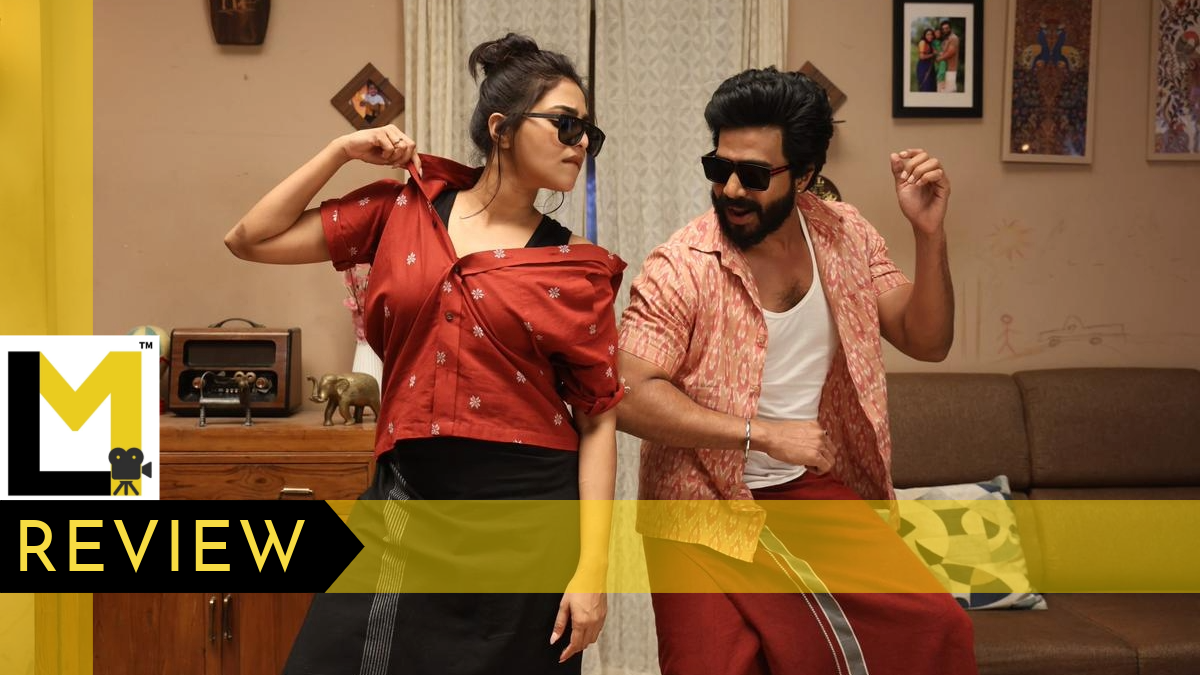
In my review of 2022’s Gatta Kusthi, I had said that even though it’s not a perfect movie, it had a layer that asked the rural drama movies to think differently. Gatta Kusthi was a film about a man who was conditioned by the patriarchal setup, coming to terms with the idea that women also have dreams and passion, and a man can also act as a supporting figure. The scene where the hero Veera sees the true self of his Kusthi champion wife was a hilarious and rewatchable moment. When it comes to its sequel, Gatta Kusthi 2, the movie wants to get into a space where it shows the dynamic in the new life of the couple who have a 6-year-old daughter. But director Chella Ayyavu is struggling here to create a proper conflict and to make it entertaining, he is going after so many irrelevant gags. And the guy who sort of redesigned the rural drama template has gone back to the usual template of those films where pointless subplots cover a simple message-oriented narrative.
After the events in the first movie, Keerthi is now employed, and she is also doing her training in wrestling. Veera is now a househusband, and he takes care of the kitchen and the education of their daughter, Mathi. The preparations for the national-level wrestling championship were happening, and certain unfortunate things happened due to Veera’s ignorance. How that impacts the family life of this duo is what we see in Gatta Kusthi 2.
In the first movie, Veera was someone who was ignorant about social changes. He may not have had a formal education, but he had common sense. What needed fixing was his worldview. But when it comes to the second part, common sense has left the chat. The mistake he makes that almost ruins Keerthi’s career feels like an act of absolute foolishness. And the build-up towards that foolish move has a lot of these comedy sequences, including Keerthi thrashing a psychologist. The coach’s ego, the separation, and the reconciliation are all presented in the silliest manner possible. The only moments of genuine fun were in those final court bits where the daughter says certain arguments to the judge. In fact, what happens inside the court is basically the plot of the movie; the events that lead up to that moment are dragged comedy.
It seems like Chella Ayyavu only had this idea of the husband and wife literally fighting to save the family. And to reach that finale, he has downgraded his hero to an ignorant fool who will believe anything and everything. But for the template to be entertaining you need comedy, romance and songs and the rest of this two and a half our movie is Challa Ayyavu adding all those things. The introduction of the hero, who, by the way, understood about women’s self-respect and dreams in the first part, has him pinching the bare waist of his neighborhood women to get ahead in line for water. Then you have him obsessing over his daughter’s teacher with long hair. And for the sake of comedy, we have him dancing to Appadi Podu with this teacher character. It’s a very weird universe where the teacher accompanies a student’s parent everywhere.
The movie is actually giving Keerthi all the right reasons to go for a divorce. I would say Veera’s insensitivity and his audacity to ask for forgiveness were worse than adultery. The overall messaging tonality of this movie is like that of those uncles and aunties who are now treating dating apps like matrimonial apps. You know that reluctant acceptance of progressive thinking. To make sure people won’t say the movie is regressive, Chella Ayyavu brings back the Karunas character, who is a hardcore misogynist. The movie’s visual quality has dropped significantly. The songs from Sean Rolden were fine.
The character of Veera has shifted more towards Dileep’s character in Mr. Buttler in this movie, and there is that layer of unbearable naivety disguised as innocence. If making you feel like giving a slap to that character (which, by the way, this character does multiple times) is a way of judging the performance, I would say Vishnu Vishal has done a good job. Aishwarya Lekshmi’s voice is obviously dubbed. The performance was fine in terms of expressions and stuff. The major hard work here is looking like a wrestler, and she did a good job in that. While the first movie was prominently about her character, the priority this time shifts to Vishnu Vishal. The little girl Zara Zyanna makes a good impression as Mathi. Mokssha makes her Tamil debut with this movie, and the purpose of that character was only to be an object of desire. Karunas and Munishkanth reprise their roles from the previous movie in a meter we have seen them perform. Ramya Krishnan and Yogi Babu are there in brief roles, just to make the cast look star-studded on the poster.
There is a Gatta Kusthi match in this movie between the lead pair, and in that we see the husband unsettling the wife, who is seeking a divorce from him, by kissing her and touching her inappropriately. I mean, I can understand showing intimacy through a song like Sambavakaari. But this method of showing reconciliation, where harassment is considered a naughty gesture of a loving husband, just makes you wonder whether the first movie was a product of the director trying to sell what was working in that socio-political context rather than truly believing in it.
